
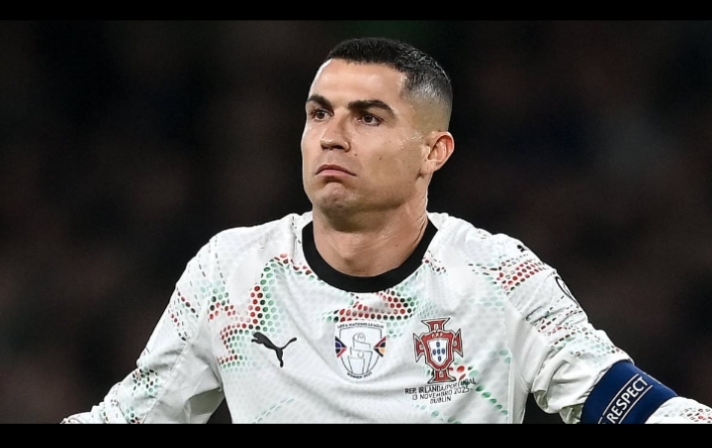
FIFA at Risk of World Cup Legal Battle After Cristiano Ronaldo’s Controversial Red Card Reprieve
Football’s global governing body, FIFA, is staring at the possibility of a legal storm after Cristiano Ronaldo’s highly controversial red-card reprieve triggered outrage among rival federations and legal advisers within international football. What should have been a straightforward disciplinary matter has instead escalated into a dispute that threatens to overshadow preparations for the next World Cup—and once again puts FIFA’s decision-making under the microscope.
Ronaldo, now in the twilight of his legendary career but still one of the most influential figures in the sport, was shown a straight red card during a crucial World Cup qualifying match. The dismissal appeared clear-cut to many observers: an off-the-ball altercation captured on multiple camera angles and judged by the referee as violent conduct. Under ordinary circumstances, such an offence carries a suspension of at least one match, sometimes more depending on severity.
But in a surprising twist, FIFA’s disciplinary committee overturned the red card just days later, ruling that the referee had made a “clear and obvious error” and that the evidence did not warrant suspension. The decision immediately sparked controversy, with several football associations accusing FIFA of preferential treatment and questioning the transparency of the review process. Now, insiders are warning that the incident may be headed toward a legal battle that could force FIFA to defend its disciplinary mechanisms in unprecedented fashion.
—
How Ronaldo’s Red Card Became an International Flashpoint
Cristiano Ronaldo’s presence alone is enough to amplify any footballing controversy, but the nature of this incident pushed it even further into the global spotlight. During Portugal’s qualifier, Ronaldo appeared to raise his arm in response to tight marking from an opposing defender. The referee interpreted the motion as excessive force and immediately brandished the red card.
The dismissal stunned Ronaldo and his teammates, and replays only deepened the debate. While some angles suggested minimal contact, others indicated deliberate movement toward the opponent. Commentary teams around the world were split, and pundits debated whether the call was harsh or justified. What united everyone, however, was the expectation that the decision would stand.
But FIFA’s sudden intervention—and the speed with which they struck down the red card—changed the tone entirely. The committee’s statement was brief and vague, referencing “insufficient grounds” yet offering no detailed breakdown of the decision-making process.
—
Rival Federations Demand Answers
Once the reprieve was confirmed, multiple national federations reacted with anger and suspicion. Sources close to the situation revealed that at least three associations formally contacted FIFA to express dissatisfaction with the ruling, claiming inconsistency and a lack of transparency in the application of disciplinary rules.
One federation went further, instructing its legal department to “assess procedural irregularities” in FIFA’s handling of the case. Another threatened to submit a complaint to the Court of Arbitration for Sport (CAS), the highest authority in global sports arbitration.
The common theme in their objections is simple:
Why was Ronaldo’s case reviewed so quickly, so quietly, and so favourably?
In many previous incidents involving less high-profile players, disciplinary reviews have taken longer, been accompanied by detailed justifications, and almost never resulted in full cancellation of a straight red card. Many federations are accusing FIFA of bowing to commercial pressure, given Ronaldo’s massive global brand appeal and the potential impact his absence could have on viewing figures for the World Cup.
—
FIFA’s Fragile Reputation Back in the Spotlight
For FIFA, the timing of this controversy could not be worse. The organisation has spent years attempting to rebuild trust after past scandals involving corruption, favouritism, and opaque decision-making. Any hint of preferential treatment threatens to undermine those efforts.
Critics argue that FIFA has once again shown that star players—especially global icons like Ronaldo—receive treatment that ordinary players could only dream of. Social media was flooded with accusations that the governing body was protecting commercial interests rather than upholding fairness and integrity.
Several analysts also highlighted the lack of VAR involvement in the initial red-card decision. While VAR could not erase referee error completely, it is designed to assist in cases of violent conduct and controversial off-the-ball incidents. The fact that the referee’s decision was overturned after the match—rather than corrected during it—has only intensified the controversy.
—
Could This Really Become a Legal Battle?
Sports-law specialists say yes. The prospect of a federation taking legal action against FIFA is rare, but not impossible. Since World Cup qualification is highly competitive and financially significant, any ruling perceived as influencing competitive balance could be challenged.
A legal confrontation would focus on two main issues:
1. Lack of Transparency
FIFA’s refusal to publish detailed justification for the decision is a major red flag. Federations could argue that they have a right to understand how and why disciplinary decisions are made—particularly those that affect tournament standings.
2. Procedural Inconsistency
If federations can demonstrate that similar incidents involving other players were treated differently, they may have grounds to challenge the ruling as arbitrary or biased.
CAS typically hesitates to intervene in on-field decisions, but disciplinary actions—especially those reversed without clarity—fall well within their jurisdiction. A full legal case could force FIFA to reveal internal discussions, evidence reviews, and committee voting results, something the organisation has historically resisted.
—
Portugal Reacts: Relief, But Also Concern
The Portuguese FA welcomed the decision, describing it as “a correction of a clear officiating mistake.” Ronaldo himself posted a brief message of gratitude, focusing on his desire to “help the team in every match.”
However, even within Portugal, some analysts acknowledged that the controversy could cast a shadow over the national team. Several pundits argued that while Ronaldo’s availability is vital, the firestorm surrounding the ruling could distract the squad during critical World Cup preparations.
—
The Broader Question: Does FIFA Need Reform?
The Ronaldo incident has reignited discussion about whether FIFA should overhaul its disciplinary and review mechanisms. Critics have offered several suggestions:
Make disciplinary reviews fully transparent, publishing detailed written explanations.
Standardise timelines for reviewing incidents, preventing accusations of favoritism.
Ensure equal treatment for players regardless of profile or commercial value.
Clarify VAR guidelines for off-the-ball incidents to avoid post-match controversy.
These conversations have been happening for years, but high-profile incidents often accelerate reform debates. Ronaldo’s case may become a catalyst for change—or, if FIFA resists scrutiny, further proof that the organisation is struggling to modernise.
—
An Avoidable Mess That Could Damage the World Cup Build-Up
As the controversy continues, one thing is certain: this situation was avoidable. A clearer explanation, a more standardised appeal process, and greater transparency could have prevented much of the backlash FIFA now faces.
Instead, the global body finds itself on the defensive, facing accusations of bias and legal threats that could disrupt the build-up to the sport’s biggest tournament. With the eyes of the world on every decision related to the World Cup, FIFA must tread carefully.
For Cristiano Ronaldo, the reprieve allows him to continue his quest for one more historic international achievement. For FIFA, however, the matter is far from over—and the fallout may shape policies and perceptions long after the final whistle of the next World Cup.
Whether this incident becomes a legal showdown or fades into football folklore depends on what happens next. But for now, the world’s most powerful football organisation stands at the centre of yet another storm, fighting to defend both its decision and its credibility.



Leave a Reply