
Crystal Palace vs Manchester United Live Match
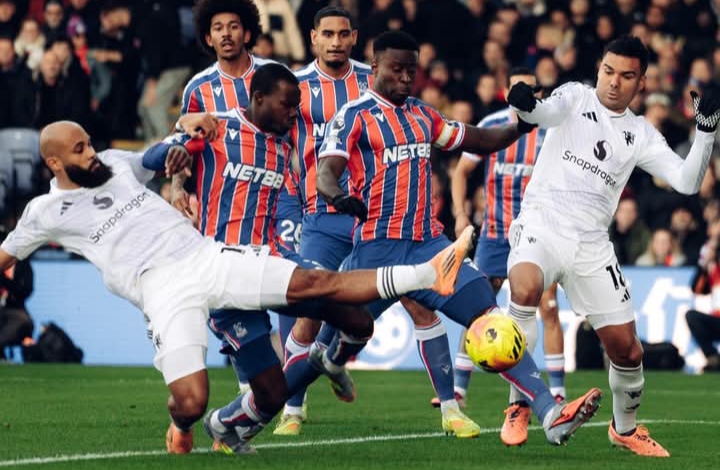
Manchester United’s trip to Selhurst Park to face Crystal Palace was always expected to be a difficult assignment. The South London ground, with its compact structure and fierce home support, is famously one of the toughest away venues in the Premier League. But what unfolded on the pitch between Palace and United offered a revealing snapshot of both teams’ current realities: Palace, organised, disciplined, and aggressive; and United, still inconsistent, still uncertain, still wrestling with structural problems that continue to surface in key moments.
This live match analysis breaks down the tactical flow, the individual performances, and the turning points that shaped the contest.
FIRST HALF – Palace Set the Tempo, United Struggle to Settle
Crystal Palace began the match the brighter of the two sides, pressing with intensity and forcing errors from a Manchester United midfield still searching for balance. Ruben Amorim’s side attempted to build from the back using their usual 3-2 structure in the first phase, but Palace’s front line — particularly their wingers — were quick to close passing lanes, making progression extremely difficult.
United’s Early Problems
From the opening minutes, several recurring issues were visible:
- Slow ball circulation allowed Palace to remain compact.
- The double pivot struggled under pressure, with United’s right-sided midfielder repeatedly losing possession when receiving with his back to goal.
- Wide players were isolated, unable to create overloads or get in behind Palace’s fullbacks.
- Palace’s midfield 5-block squeezed United centrally, forcing them to the wings where crosses were ineffective.
United had possession, but Palace had control.
Palace’s Threat on Transition
Crystal Palace excelled in transitional moments. Whenever United lost the ball in midfield — which happened often — Palace immediately looked to release their pacey forwards into space. United’s high defensive line was exposed multiple times, with Lammens forced into action early to prevent what could have been dangerous 1-on-1 situations.
The hosts’ confidence grew as United’s passing rhythm decreased. Palace pushed higher, sensing vulnerability, and the opening goal felt inevitable.
PALACE’S BREAKTHROUGH – A Goal Built on Organisation and Timing
Around the half-hour mark, the breakthrough came through a well-constructed Palace move. A misplaced pass from United’s midfield triggered another Palace transition. They quickly switched the ball to their left side, took advantage of United’s out-of-shape defensive line, and the winger finished clinically beyond the goalkeeper after a smart cut-back.
It was a goal that exposed:
- Poor defensive positioning
- Lack of tracking from United’s midfield
- Failure to slow down transitions
- Hesitation in key duels
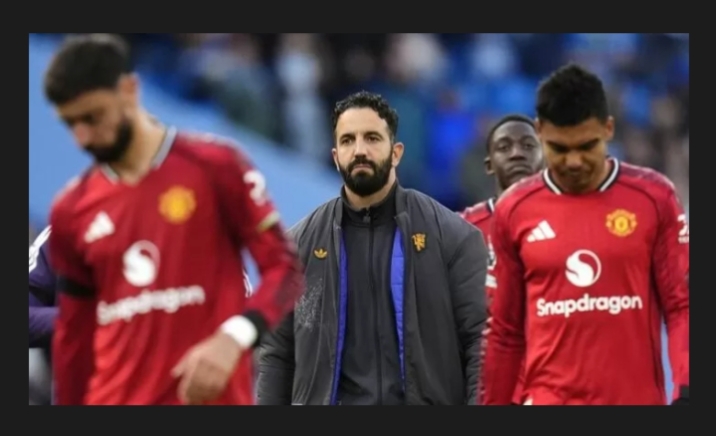
United’s body language after the goal reflected frustration more than determination.
UNITED’S RESPONSE – Possession Without Penetration
After falling behind, Manchester United tried to increase the tempo. But the same patterns persisted: sterile possession, minimal runs between the lines, predictable movement, and slow progression.
Key Issues That Blocked United’s Attack
- No true defensive midfielder controlling transitions
Palace easily bypassed United’s midfield layer, especially when United committed numbers forward. - Lack of width and overlapping runs
Fullbacks were too conservative, forcing wingers to dribble into crowded areas. - Limited creativity in half-spaces
United struggled to find a No. 10 or advanced midfielder who could receive under pressure and turn. - Forwards isolated
The striker was frequently left without service, relying on long balls and physical duels rather than structured movement.
United did finish the half stronger, but Palace never looked uncomfortable.
SECOND HALF – Amorim Makes Changes, But Palace Stay Disciplined
United came out in the second half with noticeably more urgency. Amorim adjusted the midfield shape, pushing one midfielder higher to create a temporary 3-1-4-2 in the build-up. This helped United progress the ball more efficiently, but Palace’s defensive organisation remained impressive.
United’s Improved Phases of Play
- The fullbacks pushed slightly higher to support attacks.
- The ball moved quicker into the final third.
- United created half-chances through crosses and cut-backs.
- Their pressing immediately after losing possession became more coordinated.
Despite these improvements, United still struggled to create clear goal-scoring opportunities. Palace defended with a compact 4-5-1 block, narrowing the passing lanes and forcing United into wide, ineffective positions.
PALACE THREATEN A SECOND – United Walk a Tightrope
While United pushed forward, Palace continued to threaten on the counter. One moment in the 65th minute nearly sent the home fans into a frenzy: a long pass in behind caught United’s defence sleeping, and only a superb recovery challenge from a United centre-back prevented a second goal.
United’s high line, combined with slow reactions in midfield, created dangerous openings for Palace throughout the half.
Amorim, visibly frustrated on the touchline, urged his players to maintain composure, but the structure wavered multiple times.
UNITED SEARCH FOR AN EQUALISER – But Lack Killer Instinct
As the game entered its final 20 minutes, United dominated possession, pushing Palace deeper and deeper. Several crosses flashed across the box, one shot was saved brilliantly by the Palace goalkeeper, and a scramble inside the area nearly produced the equaliser.
But the final decision-making wasn’t sharp enough:
- Shots were rushed
- Passes were overhit
- Runs lacked timing
With every wasted chance, the anxiety grew in United’s play — forcing them into desperation rather than controlled pressure.
FINAL MINUTES – Palace Hold Their Nerve, United Run Out of Ideas
In the dying stages, Palace shifted to a back-six at times, defending heroically. United threw bodies forward, but their structure collapsed each time they committed too many players. Palace read every cross, blocked every late shot, and managed the game intelligently.
Amorim attempted a final change, introducing fresh legs in midfield and attack, but Palace’s defensive discipline proved too strong.
The match ended with a roar from the home crowd — a victory earned through organisation, energy, and tactical clarity.
POST-MATCH ANALYSIS – What This Result Reveals About United
This performance highlighted several ongoing issues at Manchester United:
1. A Lack of Midfield Control
Without a natural defensive midfielder, United are constantly vulnerable to transitions and easily pressed.
2. Predictable Attacking Patterns
United rely heavily on wide play but lack creativity and movement in central areas.
3. Defensive Uncertainty
The high line is exposed because the midfield does not protect the centre effectively.
4. Mental Fragility
When Palace scored, United’s confidence dipped noticeably. This emotional inconsistency influences the team’s rhythm.
5. Inefficiency in the Final Third
Possession means little when the team cannot convert it into chances.
CONCLUSION – A Wake-Up Call for Amorim and UniteBenjamin d’s
Crystal Palace deserved their win. They were disciplined, direct, and played with a clear identity. Manchester United, meanwhile, showed familiar weaknesses — an unbalanced midfield, lack of defensive protection, and a slow attacking structure.
If United are serious about climbing the table under Ruben Amorim, matches like this cannot continue. They need:
- A proper defensive midfielder
- More bravery in central zones
- Faster transitions
- Sharper finishing
- Better emotional composure under pressure
For Palace, this is another proud night at Selhurst Park.
For Manchester United, it is another reminder of the long road still ahead.







Leave a Reply