

Ruben Amorim Makes Alarming Confession About Manchester United Star: “You Can Feel the Anxiety Every Time He Touches the Ball”
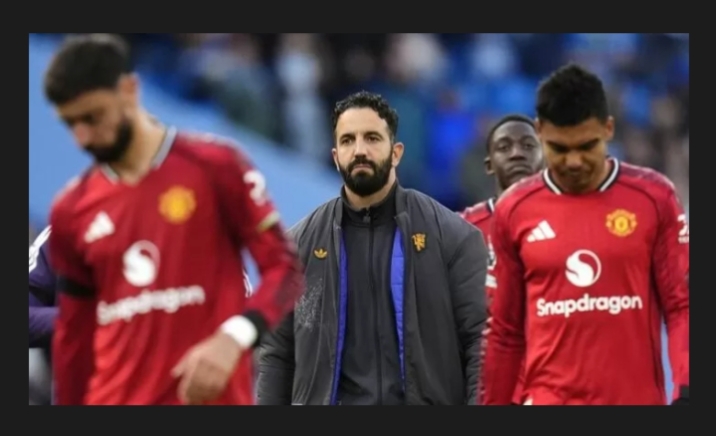
Manchester United manager Ruben Amorim is not usually one to publicly criticise or expose the emotional state of his players. Known for his calm, analytical, and protective approach, the Portuguese tactician prefers to shield his squad from headlines rather than create them. But this week, Amorim made a rare and striking confession about one of his Manchester United stars — an admission that has sent shockwaves through the fanbase and raised serious questions about the player’s confidence and future at the club.
In comments that were as honest as they were unsettling, Amorim revealed that “you can feel the anxiety every time he touches the ball.” It was a statement that highlighted far more than a minor dip in form. It suggested a deeper psychological struggle — one that is now visibly affecting the player, the team’s rhythm, and United’s performances in crucial moments.
This revelation has not only ignited debate among supporters but also placed a spotlight on the intense mental pressure that comes with wearing the Manchester United shirt in one of the most scrutinized eras in the club’s history.
—
A Manager’s Honesty That Reveals a Bigger Problem
Ruben Amorim has been at Manchester United long enough to understand the complexities of managing a club where every touch, pass, mistake, and decision becomes a talking point. But his latest comments reflect concern that goes beyond tactics.
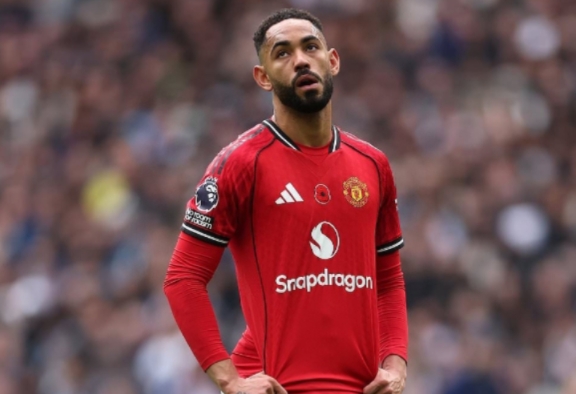
The player in question — whose identity United have not officially confirmed but who is understood by many observing the team to be one of the younger or recently struggling members of the squad — is facing a level of pressure that is beginning to seep into every aspect of his game.
According to Amorim, this anxiety manifests immediately:
“When the ball comes to him, he tenses up. You can see it. You can feel it. And that is not normal for someone of his talent.”
In a sport where confidence can be the difference between brilliance and disaster, such an admission is stark. It tells the story of a player battling hesitation, doubt, and the overwhelming weight of expectation — and a manager fighting to rebuild him.
—
The Pressure Cooker Environment at Manchester United
Manchester United’s current state makes the situation even more volatile. The club is undergoing a long-term rebuild under INEOS, expectations remain sky-high, and every performance is magnified. Players are not just competing for results — they are competing against the ghosts of United’s historic past, the memory of the Ferguson era, and the constant noise of media scrutiny.
For a player already experiencing mental fatigue or a crisis of confidence, the Theatre of Dreams can quickly become a theatre of pressure.
United’s tactical evolution under Amorim — which demands technical bravery, positional risk-taking, and rapid decision-making — adds another layer of difficulty. A player who hesitates can break the entire structure, and United have been punished several times this season for individual errors rooted not in ability, but in anxiety.
Amorim’s confession exposes just how fragile this balance has become.
—
How Anxiety Shows Up in the Player’s Game
Those who have watched United closely will recognise the signs Amorim is referring to.
It might be a heavy touch, a delayed pass, or a reluctance to receive the ball under pressure. Sometimes it appears in the form of sideways movement rather than forward intent. For attacking players, anxiety can show in snatched shots or failed dribbles. For defenders, it can appear as unnecessary clearances or panicked decision-making.
This particular player has exhibited many of these traits in recent games:
Misplaced simple passes
Avoidance of tight spaces
Slower reactions
Visible frustration or self-criticism
A lack of assertiveness on and off the ball
These are not signs of a player lacking talent — they are signs of a player whose mind is temporarily overriding his instincts.
And Amorim knows that unlocking that mental clarity again is essential for the team’s progression.
—
Amorim’s Challenge: Rebuilding Confidence Without Breaking the Player
The Manchester United manager is now handling one of the most delicate responsibilities a coach can face — helping a struggling player recover psychologically while maintaining squad performance and public calm.
Internally, Amorim is said to have been working closely with this player during training sessions, giving him specific roles designed to reduce pressure and build rhythm. He has adjusted certain tactical responsibilities to avoid exposing him unnecessarily. He has also involved United’s sports psychology team to ensure the player receives the right kind of structured support.
Publicly, Amorim has avoided naming the player, shielding him from direct criticism. His goal is not to ostracise him, but to construct a pathway back to confidence.
But his honesty during the press conference suggests he feels the broader narrative must change — that the fanbase must understand what the player is going through and the patience required.
—
Fans Are Split — Sympathy vs. Frustration
As always, Manchester United supporters are divided.
One section of the fanbase has expressed sympathy and respect for Amorim’s transparency, acknowledging that confidence issues are common in young or developing players. They believe the manager’s honesty can reduce the pressure, help the player feel supported, and create a healthier environment for growth.
Another portion, however, sees the situation more critically. At a club of United’s magnitude, they argue, players must be mentally strong enough to thrive under pressure. The Premier League is ruthless, and United cannot afford passengers in key positions.
The debate reflects a broader question: How long can United persist with a player struggling so visibly?
—
The Broader Implications for United’s Season
This anxiety issue is not isolated — it affects United’s overall play. When one player becomes hesitant, the team’s tempo drops, transitions slow, and pressing structures weaken.
In tight games — particularly against elite opposition — moments of hesitation can become defining.
Amorim understands this, which is why he has chosen to address the issue publicly. His comments are likely a signal to the club’s hierarchy that support, reinforcement, or even squad rotation may be necessary. January and next summer will be pivotal transfer windows, especially if United continue to rely heavily on players who are mentally or physically fatigued.
His confession also signals to the dressing room that no one is immune from accountability — that performance levels must rise collectively, not individually.
—
A Crucial Turning Point for the Player’s Future
Ultimately, this story is about more than one struggling footballer. It is about how Manchester United deal with pressure, vulnerability, and development in a new era under Ruben Amorim.
The player’s future will depend heavily on how he responds to this moment:
Does he rebuild himself and return stronger?
Does he continue to shrink under the pressure?
Or does United eventually seek a replacement?
The next few weeks could define the trajectory of his Old Trafford career.
—
Conclusion: A Manager’s Concern That Speaks Volumes
Ruben Amorim’s admission — “you can feel the anxiety every time he touches the ball” — is one of the most revealing comments he has made since arriving at Manchester United. It underscores the emotional and psychological realities of modern football, especially at a club where the spotlight is relentless.
For United, it is a warning sign.
For the player, it is a crossroads.
For Amorim, it is a challenge that will test his leadership and empathy.
And for the fans, it is a reminder that football is played not just with feet, but with minds — minds that sometimes need support, patience, and belief to rediscover their spark.




Leave a Reply